UK accused of blacklisting critics from govt-funded events, monitoring their social media

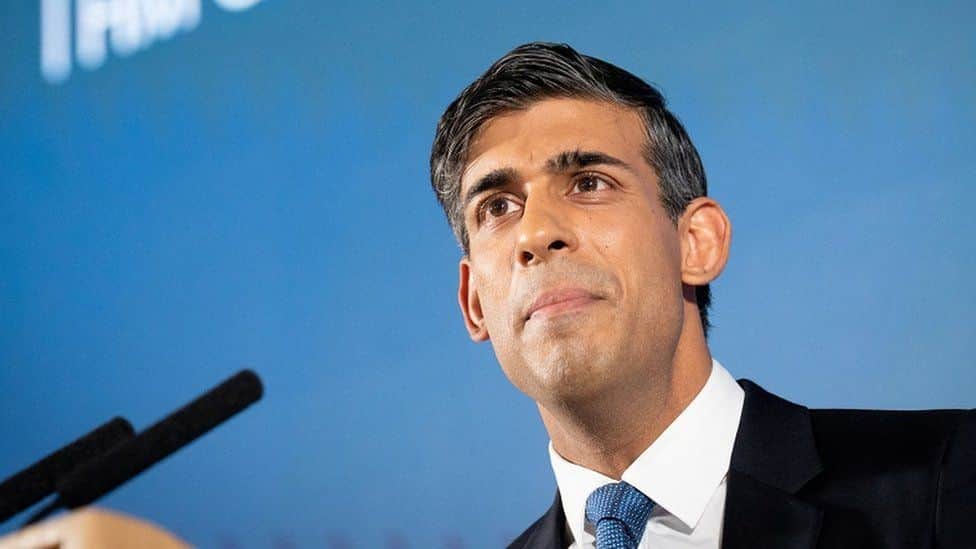
UK Prime Minister Rishi Sunak
The UK government is increasingly monitoring the online activities of its potential critics and is blocking them out of government-funded events, a new Observer report has claimed.
According to the report, several government departments, including the departments of health, culture, media and sport, and environment, food and rural affairs, have been instructed to monitor the social media accounts of certain experts who speak out against the government’s policies.
In some cases, Google searches are run targeting special individuals, and based on their views, steps are taken to ensure they don’t use governmental events to criticise the administration.

‘Secret files’ being maintained
According to the Observer, the UK government is compiling ‘secret files’ to censor its opponents, which is unlawful as per the country’s constitution.
In September, three early-childhood education experts claimed the Department of Education tried to cancel their invitation to speak at a government-funded event just because they spoke against the education policy.
&im=FitAndFill=(700,400))
Indian Army vs Pakistan Army: A comparison of military strength, weapons and firepower
&im=FitAndFill=(700,400))
What is USS Abraham Lincoln? US’ nuclear-powered battleship moving towards Middle East amid Iran tensions
)
Mars proves Einstein right as time ticks differently on the Red Planet, scientists confirm
&im=FitAndFill=(700,400))
From superpowers to supercarriers: The 5 most powerful warships at sea in 2026
&im=FitAndFill=(700,400))
Why do airlines need Iran’s airspace and what happened during past shutdowns?
)
Indian techie with H1-B visa deported and humiliated by ICE? Here is what Infosys said
&im=FitAndFill=(700,400))
New Friday OTT Releases (January 16, 2026): The Rip, Kalamkaval, 120 Bahadur- 6 new movies and TV shows on Netflix, Prime Video, SonyLIV and more
&im=FitAndFill=(700,400))
India’s new Anti-Stealth Radar Grid can detect 5th-gen F-35, Su-57 fighter jets – All about THIS air defence system
)
Russia-Ukraine War: Ukrainian Troops Desert Frontlines Amid Massive Military Manpower Crisis
&im=FitAndFill=(700,400))
Is the US military capable of fighting in the Arctic under extreme cold conditions?
)
'Beginning of the end of world': Russia warns of nukes, says third World War will take place in Arctic
)
Earth to lose gravity for 7 seconds in August? Wild claims blame two black holes for alleged glitch
&im=FitAndFill=(700,400))
Who has the edge? US air power versus Iran’s layered defence
&im=FitAndFill=(700,400))
'US vs Iran': Can Iran’s MiG‑29 jets compete with US modern fighters?
But later, human rights experts at law firm Leigh Day revealed that the practice was not limited to the Department of Education and in fact, is quite widespread.
Watch:Can Rishi Sunak keep Tory voters happy?
Now the firm is pursuing legal action against the government.
Tessa Gregory, partner at Leigh Day, was quoted by the Guardian as saying that these “hidden checks are unlawful, running contrary to data protection laws and potentially breaching equality and human rights legislation.”
Individuals being blacklisted
The Observer reported that the individuals who make anti-government posts on social media are permanently blacklisted from public events.
It cited Dan Kaszeta, a chemical weapons expert, to reveal how his invitation to speak at a UK defence conference was cancelled after officials found his ‘controversial’ posts.
He told the Observer this weekend that he knows of 12 others who have uncovered evidence of similar government blacklisting, most of whom are frightened of speaking out.
“The full extent of this is shocking and probably not fully known. I was lucky enough to be given clearcut, obvious evidence. It’s truly awful,” he was quoted as saying.
“I don’t have a duty of impartiality. Nor should I,” Kaszeta said further, adding, “Trying to extend the civil service code to me because I was merely going to talk to an audience with a handful of civil servants is utterly wrong. I’m not a revolutionary Trotskyite.”
(With inputs from agencies)