US narrowly avoids its first-ever default as Congress approves debt-ceiling suspension


US dollars
Just days before the United States was set to default on its debt for the first time, the US Congress approved a deal to lift the nation's borrowing limit. The bill, which is well on its way to becoming law, will spare the US from a catastrophic default on its $31.4 trillion in debt.
The bill sped through the Senate by a vote of 63-36, just a day after it sailed through the US House of Representatives. It will need President Joe Biden's signature before transitioning into law. As per BBC, Biden has promisedhe will enact the measure into law.
Long-drawn negotiations

The vote to suspend the federal debt limit comes after weeks of fraught negotiations as the nation tries to eliminate the threat of a disastrous credit default just four days ahead of a deadline set by the US treasury.
"America can breathe a sigh of relief," said Democratic Senate Majority Leader Chuck Schumer, adding that the nation is avoiding default, the consequences of which, in his words, would have been "catastrophic".
"But, for all the ups and downs and twists and turns it took to get here, it is so good for this country that both parties have come together at last to avoid default," he said.
&im=FitAndFill=(700,400))
Indian Army vs Pakistan Army: A comparison of military strength, weapons and firepower
&im=FitAndFill=(700,400))
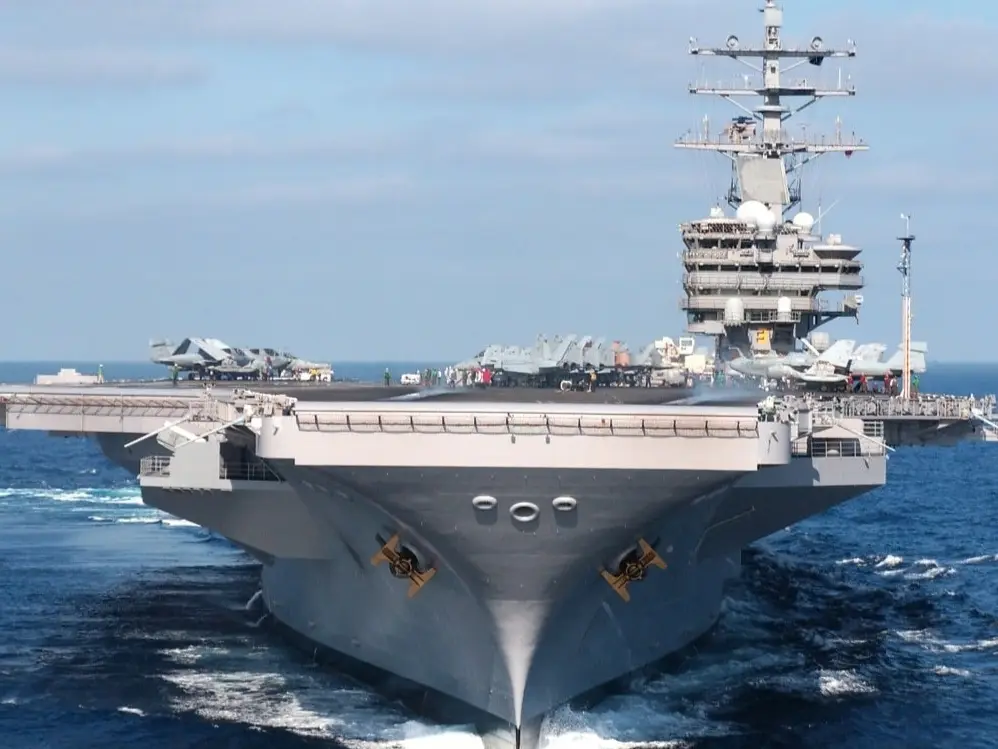
What is USS Abraham Lincoln? US’ nuclear-powered battleship moving towards Middle East amid Iran tensions
)
Mars proves Einstein right as time ticks differently on the Red Planet, scientists confirm
&im=FitAndFill=(700,400))
From superpowers to supercarriers: The 5 most powerful warships at sea in 2026
&im=FitAndFill=(700,400))
Why do airlines need Iran’s airspace and what happened during past shutdowns?
)
Indian techie with H1-B visa deported and humiliated by ICE? Here is what Infosys said
&im=FitAndFill=(700,400))
New Friday OTT Releases (January 16, 2026): The Rip, Kalamkaval, 120 Bahadur- 6 new movies and TV shows on Netflix, Prime Video, SonyLIV and more
&im=FitAndFill=(700,400))
India’s new Anti-Stealth Radar Grid can detect 5th-gen F-35, Su-57 fighter jets – All about THIS air defence system
)
Russia-Ukraine War: Ukrainian Troops Desert Frontlines Amid Massive Military Manpower Crisis
&im=FitAndFill=(700,400))
Is the US military capable of fighting in the Arctic under extreme cold conditions?
)
'Beginning of the end of world': Russia warns of nukes, says third World War will take place in Arctic
)
Earth to lose gravity for 7 seconds in August? Wild claims blame two black holes for alleged glitch
&im=FitAndFill=(700,400))
Who has the edge? US air power versus Iran’s layered defence
&im=FitAndFill=(700,400))
'US vs Iran': Can Iran’s MiG‑29 jets compete with US modern fighters?
The havoc a default would have wrought
As per AFP, the first default in American history would have led to the loss of millions of jobs and $15 trillion in household wealth, and increased costs for mortgages and other borrowings.
What is the US debt ceiling?
America spends more money than it earns through taxation. To meet the gap, it borrows money via the issuance of government bonds — seen as the world's most reliable investments.
A limit on this borrowing, as per AFP, was introduced by lawmakers around 80 years ago. It was meant to limit how much federal debt could be accrued by the government.
Since then, it has been raised more than 100 times to allow the US government to meet its spending commitments. The current limit stands at around $31.5 trillion.
Both Democrats and Republicans acknowledge that raising this debt limit is "politically toxic," reports AFP. Even so, they acknowledge that the failure to do so would result in a depression in the US economy and unsettling world markets as the government misses debt payments.
(With inputs from agencies)
WATCH WION LIVE HERE
You can now write for wionews.com and be a part of the community. Share your stories and opinions with us here.